
What Do Single Mothers Struggle With the Most?
Being a single mom is one of the toughest and most underestimated jobs in the world.
You’re the provider, the nurturer, the protector, and often — your own support system.
But behind the strong face, many single mothers silently battle exhaustion, guilt, and the fear that they’re not doing enough.
So, what exactly do single mothers struggle with the most — and how can you begin to recover your peace of mind?
Let’s break it down.
1. The Emotional Weight of Doing It All Alone
One of the biggest struggles single mothers face is the emotional burden of doing everything alone.
From school pickups to bedtime routines, it’s not just about physical tasks — it’s about carrying the mental load of being the only adult responsible for your child’s wellbeing.
You don’t get a break when you’re tired.
You don’t get to “tap out” when life feels too heavy.
And sometimes, even when you’re surrounded by people, the loneliness still lingers.
You may find yourself wondering:
“Who takes care of me when I fall apart?”
This emotional isolation can lead to chronic stress, depression, and even emotional numbness over time.
That’s why it’s so important for single mothers to find small, daily ways to recharge — even if it’s just five minutes of silence, journaling, or listening to something that helps you feel seen and supported.
2. Financial Pressure and Constant Worry
Money stress is another huge struggle for single moms — not because they’re irresponsible, but because they’re carrying the financial weight of two people alone.
Between rent, food, child care, gas, and unexpected expenses, it can feel like there’s never enough to go around.
And when you’re living in survival mode, it’s hard to think long-term or feel in control of your future.
You might catch yourself saying things like:
“If I can just make it through this month, I’ll figure out the rest later.”
That cycle can become exhausting.
Financial pressure doesn’t just affect your wallet — it affects your sleep, your mood, and your ability to be present with your children.
The truth is, financial peace starts with small steps — learning to budget, building an emergency fund, and releasing the shame of “not having it all together.”
Remember, you’re providing stability, not perfection.
3. Guilt and the Pressure to Be Perfect
Every mom feels guilt sometimes — but for single mothers, that guilt can be overwhelming.
You may feel guilty for not being able to give your children a “traditional” family structure.
You may feel guilty for working too much — or not working enough.
You may even feel guilty for needing a break.
But guilt doesn’t make you a better mom.
It just drains your energy and keeps you from enjoying the moments that matter.
The truth?
You don’t need to be perfect.
Your child doesn’t need a perfect mom — they need a present, loving, and self-aware one.
And the more you give yourself grace, the more your child learns what self-compassion looks like.
4. Exhaustion and Parental Burnout
Burnout is real — especially for single mothers.
When you’re constantly in motion — working, cleaning, cooking, helping with homework, and trying to stay emotionally available — your body and mind eventually hit a wall.
Common signs of single mom burnout include:
Emotional numbness or irritability
Feeling disconnected from your kids
Chronic fatigue, even after sleeping
Increased anxiety or sadness
Loss of interest in things you used to enjoy
You might even feel ashamed for not having “more energy,” but please remember — you’re not lazy, you’re depleted.
The antidote to burnout isn’t doing more — it’s allowing yourself to do less.
Ask for help when you can.
Let go of unnecessary expectations.
And take moments — even brief ones — to refill your emotional cup.
5. Lack of Support and Understanding
One of the most painful struggles for single moms is the lack of emotional and social support.
You might feel misunderstood by friends who have partners, or judged by people who don’t understand your story.
You may have family nearby but still feel completely unseen.
Sometimes, even when people want to help, they don’t know how.
That’s why community is so powerful.
Finding spaces — online or in person — where you can connect with other single mothers can make all the difference.
Hearing someone say, “I’ve been there too,” can instantly lift the weight of isolation.
You don’t have to do this journey alone.
6. Anger and Resentment
Many single moms struggle with unprocessed anger — not because they’re bad moms, but because they’ve been hurt, betrayed, or abandoned.
You may feel resentment toward your ex, your situation, or even yourself.
And because there’s little room to release that emotion, it often comes out as frustration or irritability.
The key to healing is acknowledging your anger without shame.
You have every right to feel the way you do.
Anger is not your enemy — it’s a signal that something needs to be healed or released.
Working through that anger in healthy ways — journaling, therapy, or guided reflection — can help you let go of emotional weight that’s been holding you back for years.
7. Losing Your Sense of Self
Many single moms reach a point where they ask,
“Who am I outside of being a mom?”
When you’re constantly putting your children first, your own identity can fade into the background.
You stop doing things you love, stop dressing up for yourself, and stop dreaming beyond survival.
But here’s the truth — you are still you.
You still have passions, goals, and desires that matter.
Reconnecting with yourself isn’t selfish — it’s essential.
Because when you nurture the woman within, you show your children what self-worth truly looks like.
Start small — take a walk alone, revisit an old hobby, or listen to something inspiring that reminds you who you are beyond motherhood.
8. The Fear of Failing Your Children
This might be the deepest struggle of all — the fear of not being “enough.”
You worry about whether your kids will grow up feeling loved, safe, and supported.
You worry about them missing out.
You worry about everything.
But here’s what most single moms don’t realize:
Your love and effort already make you enough.
Children don’t need perfection; they need consistency, warmth, and emotional safety.
And those are things you give them every single day — often without even realizing it.
How to Begin Healing and Finding Balance Again
Healing as a single mom starts with compassion — for yourself.
Here are a few steps to begin your recovery:
Acknowledge your struggles without shame. Pretending you’re fine only deepens the pain.
Set small boundaries. Protect your time, your rest, and your energy.
Ask for help — and receive it without guilt. You don’t have to prove your strength.
Create emotional check-ins. Notice when you feel drained, angry, or disconnected — and address it early.
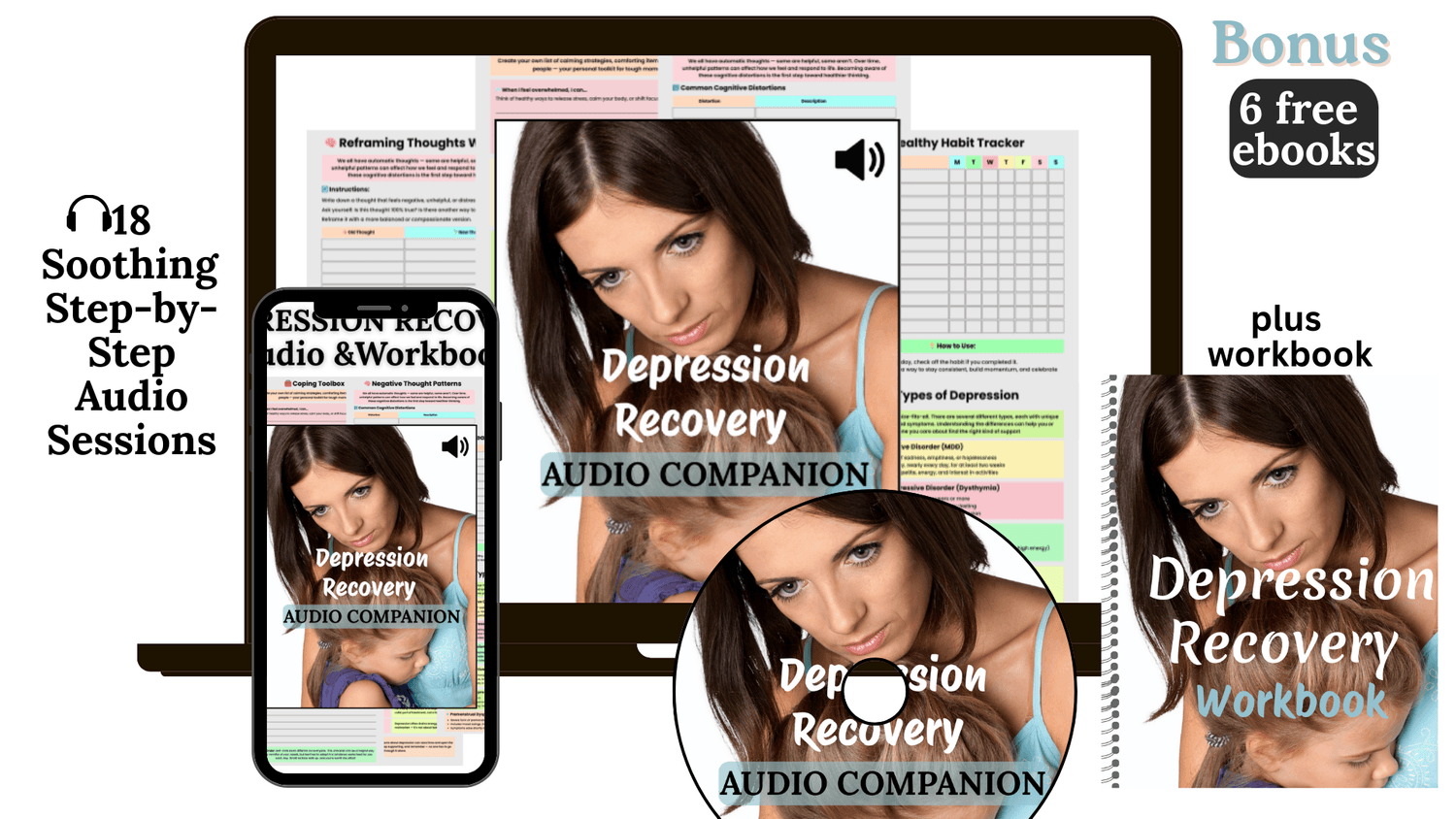
Seek emotional nourishment. Listen to things that uplift you, journal your thoughts, or explore supportive tools like The Mom Therapy Audio Course.
Final Thoughts
Being a single mom isn’t just hard — it’s heroic.
But even heroes need rest.
You don’t have to carry everything on your shoulders forever.
Every struggle you face — from burnout to loneliness to guilt — is valid, but it’s also temporary.
You can rebuild your peace, rediscover your identity, and create a life that feels lighter and more joyful.
And you don’t have to do it alone.
🌿 Need a moment of peace today?
If you’re ready to start healing emotionally and finding balance again,
listen to The Mom Therapy Audio Course — a soothing, guided resource created to help single moms release emotional pain, reduce burnout, and reconnect with themselves.
You deserve to feel whole again — one breath, one moment, one day at a time. Take time to listen to a free session to see if it's right for you. Tap below
SHARE


Subscribe now.
Sign up for our newsletter to get the most interesting stories of the day straight to your inbox before everyone else
Created with ©systeme.io• Privacy policy • Terms of service